

If you’ve ever caught yourself hunched over your phone for 20 minutes — or two hours — you’re not alone. Most of us spend a significant portion of our day looking down at a screen, and that habit is quietly putting enormous stress on the neck and spine. Here at Pravo Wellness in Menomonee Falls, WI, one of the most common concerns we hear from patients is neck pain, stiffness, and headaches that seem to come out of nowhere. More often than not, the culprit is a modern problem with a fitting name: text neck.
Understanding what text neck is, why it happens, and what you can do about it can make a real difference in how you feel every single day. Whether you’re a student, a remote worker, or someone who simply scrolls through social media before bed, this article is for you.
What Is Text Neck?
Text neck is a repetitive stress injury and postural condition caused by prolonged forward head posture — most commonly from looking down at a smartphone, tablet, or laptop. When the head tilts forward, the effective weight it places on the cervical spine increases dramatically, putting strain on muscles, ligaments, and discs in the neck. Over time, this repeated stress can lead to chronic pain, stiffness, and structural changes in the spine.
What Causes Text Neck?
The root cause of text neck is simple: physics. Your head weighs somewhere in the neighborhood of 10 to 12 pounds when it sits in a neutral, upright position directly over your shoulders. That’s already a significant load for your cervical spine to support all day long. But when you tilt your head forward — even just 15 degrees — the effective load on your neck increases substantially. Research suggests that at a 60-degree forward tilt, that load can feel closer to 60 pounds of pressure on the cervical spine. That kind of sustained force adds up fast.
The primary driver is, of course, device use. Smartphones are the biggest contributor, simply because of how we hold them — usually below eye level, requiring us to look down. Tablets, laptops used on a couch or low surface, and even reading books in certain positions can contribute to the same problem. The issue isn’t really the device itself. It’s the posture we adopt while using it and how long we stay in that position.
Sedentary lifestyles, desk jobs, and weakened postural muscles all make the problem worse. If your deep neck flexors and upper back muscles are not strong or conditioned enough to hold your head up properly, your body will default to the path of least resistance — which usually means slouching forward and letting the passive structures (ligaments and discs) absorb the load.
Signs & Symptoms to Watch For
Text neck doesn’t always announce itself with dramatic pain. In many cases, it starts subtly and gradually becomes harder to ignore. At Pravo Wellness in Menomonee Falls, WI, patients often describe their symptoms as something they tried to push through for weeks or months before seeking care. Knowing what to look for early can help you take action before things get worse.
The most common symptom is a dull, achy pain in the neck — particularly at the base of the skull or between the shoulder blades. This is often the result of overworked muscles fighting to hold the head up against gravity as posture deteriorates. Muscle tightness and stiffness in the neck and upper shoulders are also very common, especially after long sessions of phone or computer use.
Headaches are another frequent complaint, and they are often tension-type headaches that originate at the base of the skull and radiate upward. Some people experience tingling or numbness into the arms and hands, which can indicate that the nerve roots exiting the cervical spine are being compressed or irritated. Shoulder pain, jaw tension, and even fatigue can all be connected to prolonged forward head posture.
In more advanced cases, the normal curve of the cervical spine — which should have a gentle, lordotic (inward) curve — can begin to straighten or even reverse. This is sometimes referred to as “military neck” or cervical kyphosis, and it changes how weight is distributed throughout the entire spine, potentially affecting the thoracic and lumbar regions as well.
How Text Neck Affects Your Spine Over Time
The spine is a remarkably adaptive structure, but it responds to the demands placed on it — for better or worse. When you consistently adopt a forward head posture, the body begins to remodel itself around that position. Muscles on the front of the neck and chest become shortened and tight, while the muscles in the back of the neck and upper back become overstretched and weakened. This muscular imbalance makes it harder and harder to return to a neutral posture without effort.
Over time, the intervertebral discs in the cervical spine experience uneven pressure. Discs that are repeatedly compressed on one side can begin to lose hydration, height, and integrity. This can contribute to disc degeneration, which is a process that happens naturally with age but can be accelerated by poor posture and repetitive mechanical stress. While disc degeneration doesn’t always cause pain, it can reduce the spine’s ability to absorb shock and maintain healthy movement.
The facet joints — small joints that run along the back of the spine and guide its movement — can also be affected. Sustained forward flexion loads these joints in ways they are not designed to handle for long periods, potentially contributing to joint irritation and restricted range of motion. For teenagers and young adults who are still developing, text neck is a particularly important concern, since poor postural habits established early in life can have long-term consequences for spinal health.
Many people in the Menomonee Falls, WI community are surprised to learn that their chronic upper back tension, recurring headaches, or even their shoulder pain might be linked to how they hold their head. The body is deeply interconnected, and what happens in the cervical spine ripples outward in all directions.
How Chiropractic Care Fits In
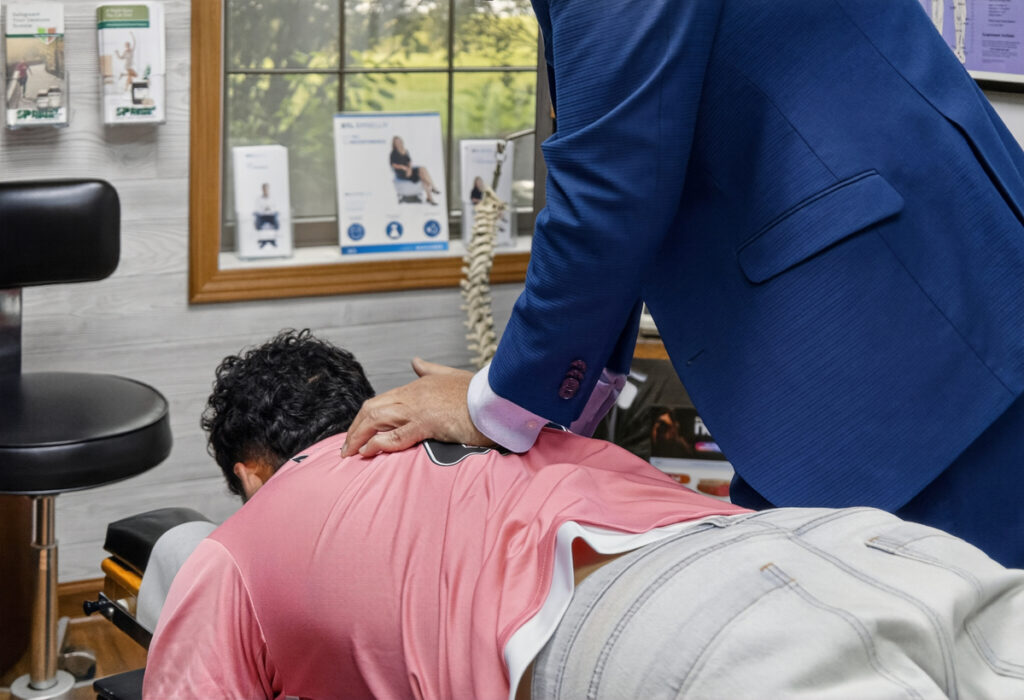
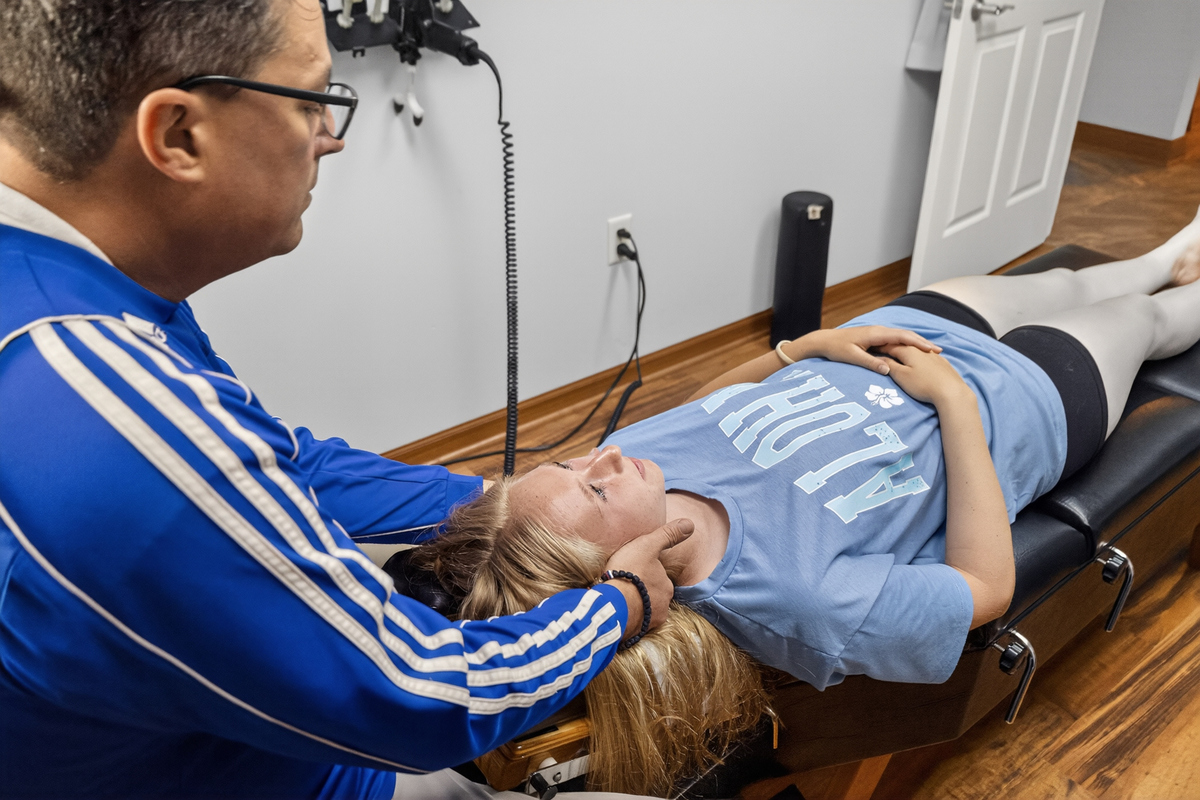
Chiropractic care is one of the most well-suited conservative approaches for addressing the effects of text neck. Rather than masking symptoms with medication, chiropractic care focuses on identifying and correcting the underlying mechanical dysfunction — and that’s exactly what Dr. Grbich Full does at Pravo Wellness.
When a patient comes in with neck pain or signs of forward head posture, a thorough evaluation is the starting point. This typically involves a postural assessment, range of motion testing, and a review of daily habits and activities that may be contributing to the problem. The goal is to understand the full picture before developing a care plan.
Chiropractic adjustments to the cervical and thoracic spine can help restore proper joint mobility, reduce nerve irritation, and support better alignment. Research, including work summarized by organizations like the American Chiropractic Association and published in respected medical journals, suggests that spinal manipulation can be effective for neck pain as part of a multimodal, conservative approach. At Pravo Wellness, care is never one-size-fits-all — Dr. Grbich Full tailors each visit to where the patient is in their healing process.
Beyond adjustments, chiropractic care for text neck may also involve soft tissue work to address tight muscles in the neck and shoulders, guidance on rehabilitative exercises to strengthen postural muscles, and ergonomic education to help patients make sustainable changes at home and at work. The goal is not just to get you out of pain — it’s to help you understand what’s happening in your body and how to keep it from coming back.
Practical Tips to Protect Your Neck
Prevention and self-care are huge parts of the equation when it comes to text neck. There are realistic, evidence-informed steps you can take every day to reduce strain on your cervical spine without giving up your smartphone.
The most impactful change you can make is to raise your phone or device closer to eye level. Instead of looking down, try bringing the screen up so your head can stay in a neutral position over your shoulders. This simple shift dramatically reduces the load on your cervical spine. It may feel awkward at first, but it becomes habit over time.
Taking frequent breaks is also essential. Aim to pause every 20 to 30 minutes and move your neck through its natural range of motion — gently looking left and right, up and down, and doing a few slow neck rolls. These micro-breaks give the muscles and joints a chance to reset before tension builds up. Setting a reminder on your phone can help you stay consistent.
-
Strengthen your postural muscles with exercises like chin tucks, thoracic extensions over a foam roller, and shoulder blade squeezes. These target the muscles most affected by forward head posture.
-
Be mindful of your sleeping position — sleeping on your stomach forces your head into rotation for hours at a time and can worsen neck symptoms significantly.
If you work at a desk, make sure your monitor is at eye level and your chair supports a neutral lumbar curve. Ergonomics at your workstation matter just as much as how you hold your phone.

When to See a Chiropractor
Mild, occasional neck stiffness after a long day of screen time is common and often resolves with rest and movement. But there are signs that warrant a professional evaluation. If your neck pain is persistent — lasting more than a week or two without improvement — it’s worth getting checked out. If the pain is severe, worsening, or accompanied by numbness, tingling, or weakness in the arms or hands, that’s a signal to seek care sooner rather than later.
Recurring headaches that seem to originate at the base of the skull, limited range of motion in the neck, or pain that disrupts your sleep are also good reasons to make an appointment. At Pravo Wellness in Menomonee Falls, WI, Dr. Grbich Full can help determine whether your symptoms are related to text neck or another contributing cause, and build a care plan accordingly.
It’s also important to know when chiropractic care should be accompanied by — or deferred to — medical attention. If you have severe neurological symptoms such as sudden loss of strength in the arms or hands, difficulty with coordination or balance, or significant trauma to the neck, please seek emergency or urgent medical care first. Chiropractors are trained to recognize red flags and will refer you to the appropriate provider when necessary.
Healthy Posture vs. Text Neck Posture
|
Feature |
Healthy Neutral Posture |
Text Neck Posture |
|---|---|---|
Head Position |
Balanced over the shoulders, ears in line with the shoulders |
Tilted forward and downward, ears in front of shoulders |
Cervical Curve |
Natural inward (lordotic) curve preserved |
Curve reduced, straightened, or reversed |
Spinal Load |
Approximately 10–12 lbs on the cervical spine |
Can reach 40–60 lbs of effective force at deeper angles |
Muscle Activity |
Balanced engagement of deep neck flexors and extensors |
Overworked posterior muscles, weakened deep neck flexors |
Common Symptoms |
Little to no chronic discomfort |
Neck pain, headaches, shoulder tension, possible arm numbness |
Long-Term Risk |
Preserved disc health and joint function |
Accelerated disc degeneration, joint irritation, postural changes |
Myths vs. Facts About Text Neck
Myth: Text neck only affects older adults.
Fact: Text neck is increasingly common in teenagers and young adults, largely because they tend to be the heaviest smartphone users. Age is not a protective factor here — posture and duration of device use are the primary risk factors. In fact, younger spines that are still developing may be more susceptible to long-term postural changes from sustained poor habits.
Myth: If it doesn’t hurt, it isn’t a problem.
Fact: Many postural and structural changes develop silently, without obvious pain, until they reach a certain threshold. By the time neck pain or headaches appear, the underlying issue may have been building for months or even years. Regular postural check-ins and proactive care are far more effective than waiting for symptoms to demand your attention.
Myth: Chiropractic care is only for people who are already in severe pain.
Fact: Chiropractic care is highly appropriate for early-stage postural issues, mild stiffness, and maintenance of spinal health. You don’t have to be in significant pain to benefit from an evaluation. Many of Dr. Grbich Full’s patients at Pravo Wellness come in for routine wellness care and leave better equipped to prevent problems before they escalate.
Myth: Just sitting up straight will fix text neck.
Fact: Improving your sitting posture is a great start, but it’s rarely enough on its own. Text neck involves muscular imbalances, joint restrictions, and habitual movement patterns that need to be actively addressed. Rehabilitative exercises, hands-on treatment, and ergonomic adjustments all play an important role in a complete recovery.
Myth: Text neck is a permanent condition.
Fact: In most cases, especially when caught early, the effects of text neck can be significantly improved with the right combination of chiropractic care, targeted exercise, and lifestyle changes. While advanced structural changes may take longer to address, meaningful reduction in symptoms and improved function is a realistic and achievable goal for most patients.
Final Thoughts from Pravo Wellness
Text neck is one of those modern health challenges that can sneak up on you gradually — one scroll, one email, one late-night video at a time. But the good news is that it’s also one of the most preventable and treatable postural conditions we see in practice. A little awareness goes a long way.
Here in Menomonee Falls, WI, the team at Pravo Wellness is committed to helping our neighbors understand their bodies and take confident steps toward better spinal health. Whether you’re dealing with nagging neck pain, tension headaches, or just want to know if your posture is on the right track, we’re here to help. Dr. Grbich Full takes the time to listen, evaluate thoroughly, and create a care plan that makes sense for your life and your goals.
You don’t have to give up your phone. You just need to use it smarter — and give your spine the support it deserves. If any of what you’ve read today sounds familiar, we’d encourage you to reach out to Pravo Wellness. A conversation is always a great first step.
Frequently Asked Questions
How many hours of phone use per day causes text neck?
There is no single threshold that applies to everyone, but research suggests that prolonged forward head posture — even in shorter sessions — accumulated over the course of a day adds up quickly. It’s less about a specific hour count and more about how you hold your device and whether you’re taking regular breaks to reset your posture.
Can text neck cause permanent damage?
When addressed early, text neck rarely causes permanent damage. However, if left unmanaged for years, it can contribute to accelerated disc degeneration and lasting postural changes in the cervical spine. Early evaluation and conservative care are the best ways to prevent long-term consequences.
Is text neck the same as a pinched nerve?
Not exactly, though text neck can sometimes contribute to nerve compression or irritation. Text neck is a broader postural condition involving muscle imbalance, joint stress, and spinal loading. A pinched nerve (cervical radiculopathy) is a specific condition where a nerve root is compressed, often causing radiating pain, numbness, or weakness in the arm. A chiropractor can evaluate whether nerve involvement is part of your presentation.
Can children get text neck?
Yes — and this is a growing concern among healthcare providers. Children and teenagers who spend significant time on tablets and smartphones are just as susceptible to the postural effects of text neck as adults. Encouraging good device habits early in life is one of the best investments in a child’s long-term spinal health.
How long does it take to recover from text neck?
Recovery timelines vary based on the severity of the condition, how long it has been present, and the individual’s overall health and compliance with care recommendations. Mild cases may show improvement within a few weeks of care and lifestyle changes, while more advanced presentations may take longer. Dr. Grbich Full at Pravo Wellness can give you a more personalized sense of what to expect after a thorough evaluation.
Does chiropractic care hurt for text neck patients?
Chiropractic care is generally gentle and well-tolerated. Some patients experience mild soreness after their first few adjustments, similar to how muscles feel after a good workout, but this typically resolves within a day or two. Dr. Grbich Full adjusts the approach based on each patient’s comfort level, health history, and response to care.
TL;DR Summary
-
Text neck is a postural condition caused by prolonged forward head posture during phone, tablet, or computer use, and it places significant mechanical stress on the cervical spine.
-
Symptoms include neck pain, stiffness, tension headaches, shoulder tightness, and in some cases arm numbness or tingling — all of which can develop gradually without obvious warning signs.
-
Over time, text neck can contribute to muscle imbalances, disc degeneration, and changes to the natural curve of the cervical spine if left unaddressed.
-
Chiropractic care, including spinal adjustments, soft tissue work, and postural rehabilitation, can be an effective conservative approach for managing and improving text neck symptoms.
-
Raising your screen to eye level, taking regular movement breaks, and strengthening postural muscles are among the most impactful daily habits you can adopt — and the team at Pravo Wellness in Menomonee Falls, WI is here to support you every step of the way.